Urinary incontinence — or bladder leakage — is extremely common in women, yet many feel embarrassed to talk about it or assume it’s a normal part of aging, pregnancy, or childbirth. The truth is that urinary incontinence is treatable, and in many cases, pelvic floor physiotherapy can significantly improve or completely resolve symptoms.
At Physiola in Mississauga, we help women of all ages regain bladder control, improve pelvic health, and return to daily activities with confidence.
This guide explains what urinary incontinence is, why it happens, and how treatment can help.
What Is Urinary Incontinence?
Urinary incontinence is the involuntary loss of urine due to reduced bladder control. It can range from occasional leakage when coughing or exercising to a sudden strong urge to urinate that’s difficult to control.
While common, it is not something you have to live with.
Bladder control depends on proper function of:
- pelvic floor muscles
- bladder and urethra
- nervous system
- abdominal pressure control
- hormonal factors
When any part of this system is not working optimally, leakage can occur.
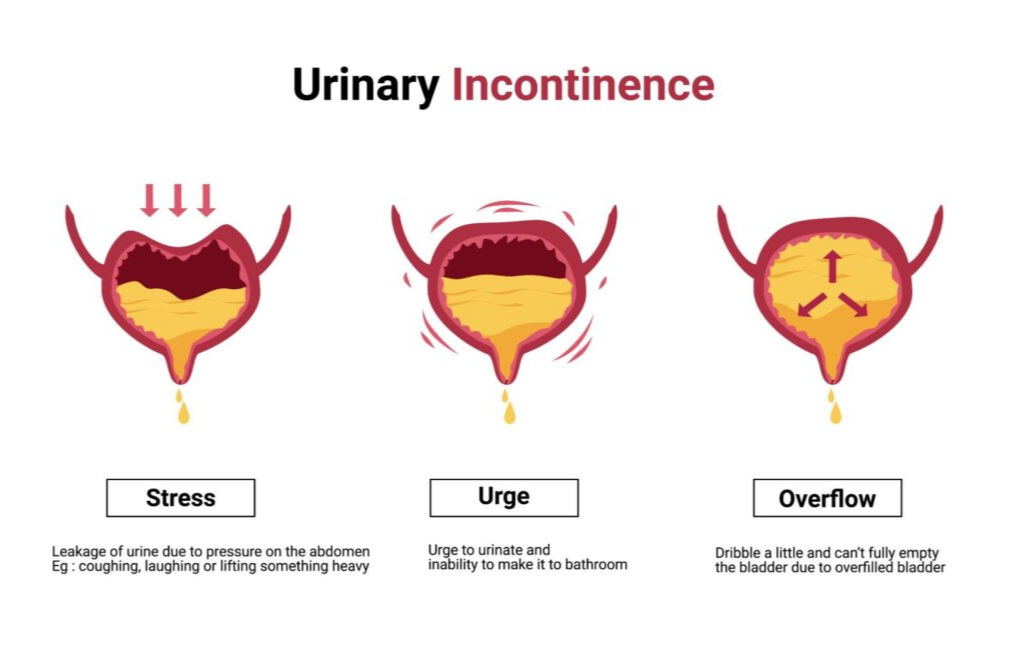
Types of Urinary Incontinence in Women
Stress Incontinence
Leakage occurs with physical pressure on the bladder, such as:
- coughing or sneezing
- laughing
- running or jumping
- lifting
- exercise
This is often linked to weakened pelvic floor muscles.
Urge Incontinence
A sudden, intense urge to urinate followed by leakage. You may notice:
- frequent urination
- difficulty reaching the bathroom in time
- strong bladder urgency
This is often related to bladder overactivity or nerve signalling issues.
Mixed Incontinence
A combination of both stress and urge symptoms.
What causes urinary incontinence?
Pregnancy and Childbirth
- pelvic floor muscle stretching
- tissue changes
- nerve irritation
- abdominal pressure changes
Leakage may appear immediately postpartum or years later.
Pelvic Floor Muscle Weakness or Dysfunction
Pelvic muscles may be weak, tight, poorly coordinated, or unable to respond quickly to pressure changes.
Contrary to popular belief, leakage is not always caused by weakness — sometimes muscles are overly tense or not functioning properly.
Hormonal Changes
Menopause and hormonal shifts can affect tissue support around the bladder and urethra.
Chronic Pressure on the Pelvic Floor
- chronic coughing
- constipation or straining
- heavy lifting
- high-impact exercise
Surgery or Medical Conditions
- abdominal or pelvic surgery
- neurological conditions
- obesity
- aging-related changes
Signs You Should Seek Help
You may benefit from an assessment if you experience:
- leaking when coughing, laughing, or exercising
- difficulty controlling bladder urgency
- frequent urination
- waking at night to urinate often
- avoiding activities due to fear of leakage
- using pads regularly
- postpartum bladder changes
Early treatment typically leads to faster improvement.
If you notice pelvic heaviness, pressure, or a vaginal bulge along with bladder leakage, you may also be experiencing pelvic organ prolapse.
How Pelvic Physiotherapy Treats Urinary Incontinence
Pelvic floor physiotherapy is one of the most effective first-line treatments for urinary incontinence.
At Physiola in Mississauga, treatment focuses on restoring optimal pelvic function — not just strengthening muscles.Your physiotherapist may help with:
Pelvic Floor Assessment
Evaluation of muscle strength, coordination, tension, and control.
Targeted Exercise Therapy
- pelvic floor muscle training
- core and breathing coordination
- pressure management strategies
- functional movement retraining
Exercises are individualized — not just generic “Kegels.”
Bladder Training
Strategies to improve bladder control, reduce urgency, and normalize frequency.
Education and Lifestyle Strategies
- fluid habits
- bowel health
- posture and lifting mechanics
- return to exercise guidance
Technology-Assisted Treatments (when appropriate)
Physiola uses adjunct technologies to support muscle activation and tissue recovery.
Can Urinary Incontinence Be Fully Resolved?
Many women see major improvement or full resolution with proper treatment. Outcomes depend on:
- cause of symptoms
- severity
- consistency with therapy
- overall health factors
Even long-standing symptoms often improve significantly with guided care.
When Should You See a Pelvic Physiotherapist?
You do not need a referral to seek pelvic physiotherapy in Ontario. Consider booking an assessment if:
- symptoms persist beyond 6–8 weeks postpartum
- leakage interferes with daily life
- you want to return to exercise safely
- symptoms are worsening
- you want prevention or early intervention
Seeking help early can prevent symptoms from becoming more severe.
Urinary Incontinence Treatment in Mississauga
At Physiola, we provide personalized pelvic physiotherapy for women experiencing urinary incontinence, postpartum changes, pelvic pain, and core dysfunction. Our approach focuses on restoring strength, coordination, and confidence so you can return to the activities you enjoy.
If you’re experiencing bladder leakage, support is available and effective treatment options exist.
Book an assessment to start your recovery.
Unsure if pelvic physiotherapy is for you?
Book a complimentary 15 minute phone consultation with one of our physiotherapists today.